

Have you ever received a shipment of building products only to find them dinged, scratched, or even broken?
Heavy, awkward, and fragile products are frequently damaged or poorly protected in transit, leading to costly freight claims, failed quality control checks, and significant project delays. But what if we told you that much of this damage isn’t inevitable, but rather a problem that can be solved with the right approach to protective packaging?
This article explains why building products are high-risk assets and what your packaging must structurally control to prevent transit failures. We will move beyond standard boxes to explore the protective packaging specifications for building products that ensure your stock arrives in installation-ready condition.
Building and home products present a unique packaging challenge. Unlike standard consumer goods, they often combine high weight, fragile materials, irregular geometries, and complex supply chains. Understanding these failure points is the first step in transit damage prevention.
During transport, these differences become significant. Components may move, flex or resonate differently under the same loading conditions, creating localised stresses within the product. If internal movement is not adequately controlled, these stresses can lead to premature failure.
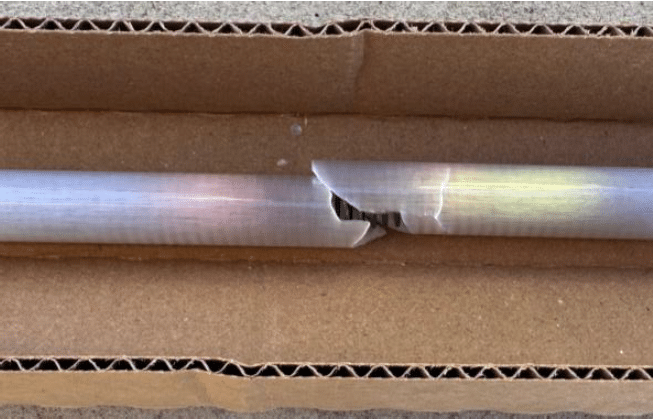
Fig: Fracture of the quartz glass element caused by internal resonance of the coiled spring during transit.
Features such as integrated lifting points, protective end supports and intuitive pack orientation reduce handling effort while lowering the risk of damage throughout the supply chain.
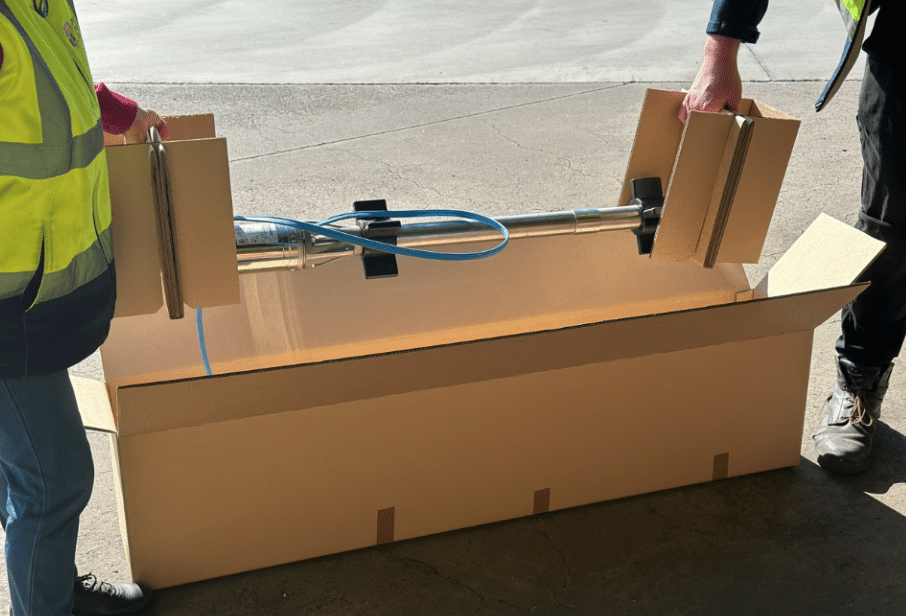
Fig: Protective inserts with integrated handholds to improve safe manual handling during packing and unpacking.
Transit damage is rarely limited to replacing a damaged product. A single failure can trigger warranty claims, replacement freight, installation delays, project disruption, and lost confidence from builders, architects, distributors, and retail partners. Understanding how these failures occur is the first step towards preventing them through better packaging design.
These failure mechanisms rarely occur in isolation. Most damaged products experience a combination of impact, vibration, compression and handling stresses throughout the supply chain.
Before you brief a packaging partner, it’s important to understand the key specifications that govern how well packaging will protect building products in transit.
Different building products require tailored packaging approaches based on their unique vulnerabilities.
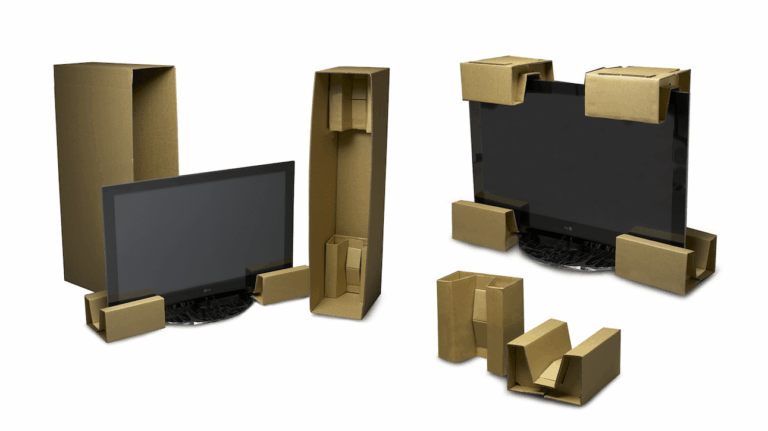
A precision fit does more than stop movement; it optimises your logistics footprint. By using corrugated protective inserts and custom-engineered bulkheads, you secure products firmly while reducing material waste. For bulk shipments, custom bulkheads secure the load on multi-unit pallets or crates. This reduces both transit damage prevention friction and freight costs because minimising void space allows you to fit more units safely on every pallet.
A common misconception is that eco-friendly materials cannot perform as well as foam or plastic for heavy-duty applications. However, modern, engineered cardboard alternatives provide superior, engineered protective packaging.
When looking at real-world results, the Unidrive case study demonstrates this in practice. Eliminating foam packaging for driveline components resulted in a 20% reduction in packaging costs while successfully transitioning to 100% recyclable materials without compromising product protection. It shows that custom-engineered sustainable packaging can deliver both durability and environmental benefits without sacrificing performance.
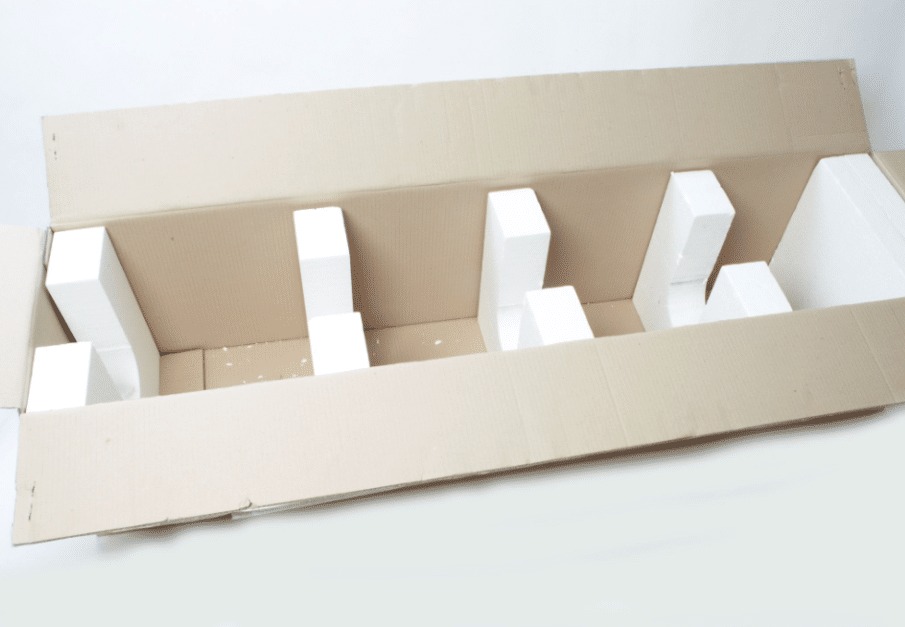
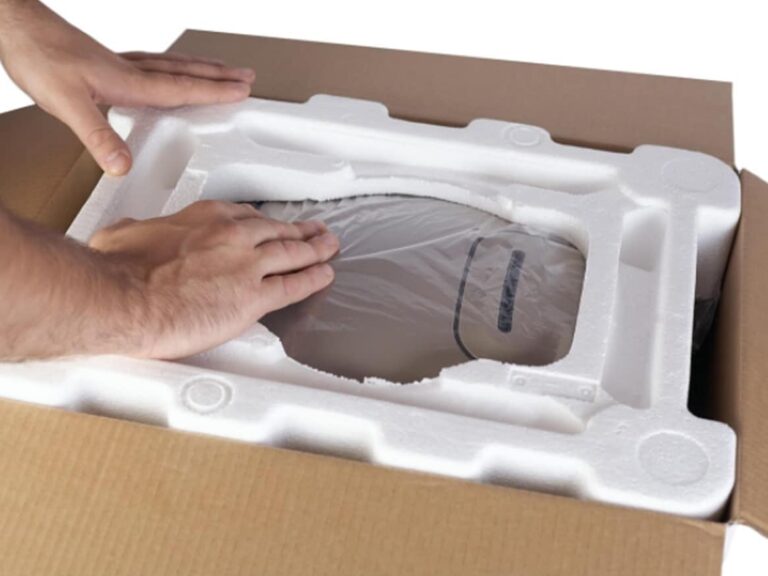
Fig: Original EPS Transit Packaging Inserts
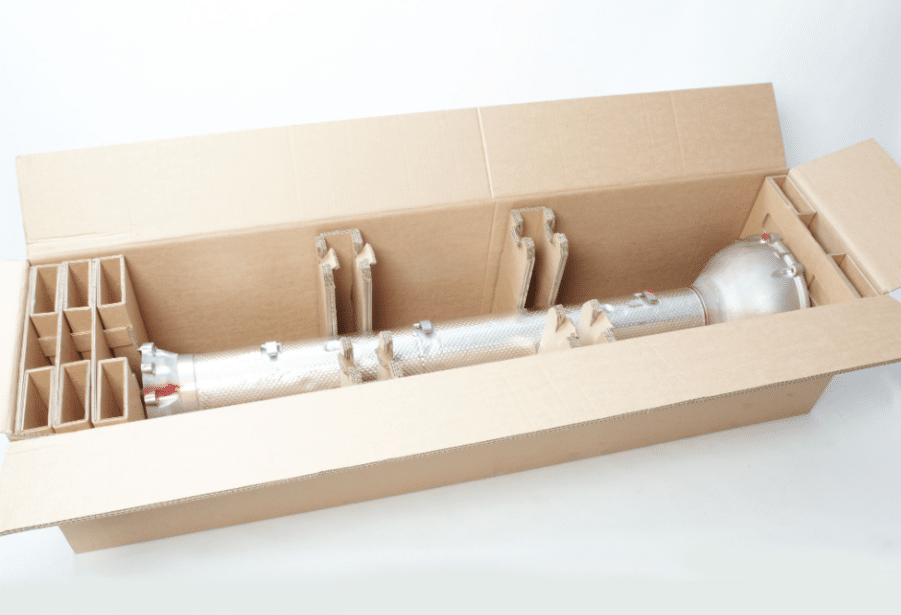
Fig: PPI Engineered Corrugated Packaging
Stopping damage is a problem solved in the planning phase before design ever begins. Working with an expert packaging partner through a custom design and engineering process involves sharing product specifications and historical failure data, followed by prototyping, real-world transit testing, and warehousing support. This ensures your final specification is entirely fit-for-purpose for your supply chain.
Before requesting a quote for hardware protective packaging or general fixtures, have these details prepared:
| Specification Item | What to Provide to Your Supplier |
| Product Data | Exact dimensions (L, W, H) and net weight. |
| Fragility | Identification of delicate parts (e.g., glass, finish sensitivity). |
| Logistics | Unit quantity per box, pallet configuration, and stacking requirements. |
| Environment | Transit duration and expected climate/moisture exposure. |
| History | Data on past damage points, return rates, and current pain points. |
You need exact product dimensions, weight, fragility ratings, current pallet configurations, and any specific environmental/climate challenges.
Solutions are subjected to rigorous drop, vibration, and compression testing to simulate real-world supply chain conditions.
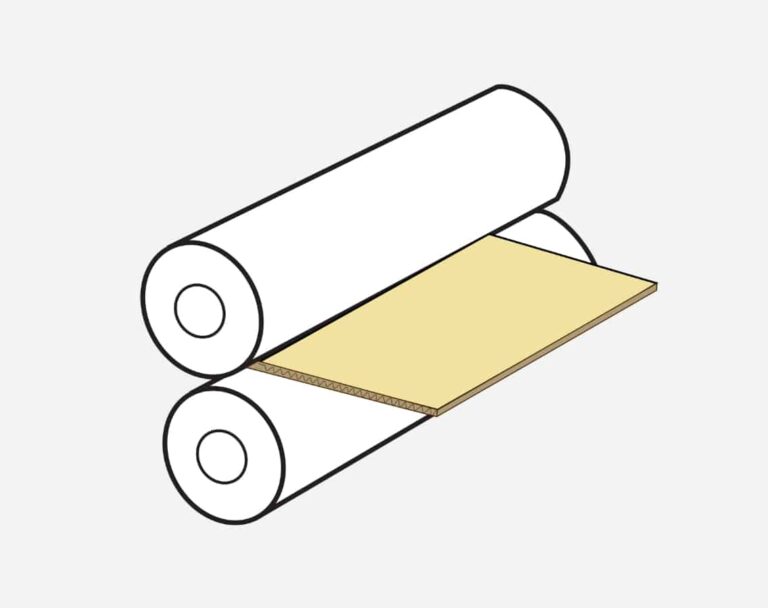
The Edge Crush Test measures the structural strength of the cardboard edge, which is critical for preventing pallet collapse when heavy products are stacked high.
Absolutely. Smart, engineered cardboard designs achieve high strength-to-weight ratios, entirely negating the need for plastic or foam.
Yes. Their sensitivity to vibration, heavy internal components, and electrical housings requires specialised HVAC component packaging compared to standard hardware.
While custom solutions have an upfront engineering cost, they drastically cut down on damage claims, replacement costs, and lost inventory, saving you money in the long run.
Ultimately, preventing damage to building products is a specification problem that must be solved before design begins. By meticulously defining your requirements and partnering with engineering experts, you can convert transit damage from a recurring headache into a competitive supply chain advantage.
Ready to safeguard your valuable building products and enhance your supply chain efficiency? Request a consultation with a PPI packaging engineer today to discuss your specific needs and discover why manufacturers choose PPI for innovative, reliable protective packaging solutions.

Dolor sit amet, consectetur adipisi cing elit, sed do eius mod tempor incididunt ut labore et dolore magna aliqua.
Dolor sit amet, consectetur adipisi cing elit, sed do eius mod tempor incididunt ut labore et dolore magna aliqua.

Dolor sit amet, consectetur adipisi cing elit, sed do eius mod tempor incididunt ut labore et dolore magna aliqua.
Dolor sit amet, consectetur adipisi cing elit, sed do eius mod tempor incididunt ut labore et dolore magna aliqua.

Dolor sit amet, consectetur adipisi cing elit, sed do eius mod tempor incididunt ut labore et dolore magna aliqua.
Dolor sit amet, consectetur adipisi cing elit, sed do eius mod tempor incididunt ut labore et dolore magna aliqua.
Dolor sit amet, consectetur adipisi cing elit, sed do eius mod tempor incididunt ut labore et dolore magna aliqua.

Dolor sit amet, consectetur adipisi cing elit, sed do eius mod tempor incididunt ut labore et dolore magna aliqua.
Dolor sit amet, consectetur adipisi cing elit, sed do eius mod tempor incididunt ut labore et dolore magna aliqua.
Dolor sit amet, consectetur adipisi cing elit, sed do eius mod tempor incididunt ut labore et dolore magna aliqua.
Dolor sit amet, consectetur adipisi cing elit, sed do eius mod tempor incididunt ut labore et dolore magna aliqua.
Dolor sit amet, consectetur adipisi cing elit, sed do eius mod tempor incididunt ut labore et dolore magna aliqua.

Dolor sit amet, consectetur adipisi cing elit, sed do eius mod tempor incididunt ut labore et dolore magna aliqua.
Dolor sit amet, consectetur adipisi cing elit, sed do eius mod tempor incididunt ut labore et dolore magna aliqua.

Dolor sit amet, consectetur adipisi cing elit, sed do eius mod tempor incididunt ut labore et dolore magna aliqua.

Dolor sit amet, consectetur adipisi cing elit, sed do eius mod tempor incididunt ut labore et dolore magna aliqua.
Dolor sit amet, consectetur adipisi cing elit, sed do eius mod tempor incididunt ut labore et dolore magna aliqua.
Dolor sit amet, consectetur adipisi cing elit, sed do eius mod tempor incididunt ut labore et dolore magna aliqua.
Dolor sit amet, consectetur adipisi cing elit, sed do eius mod tempor incididunt ut labore et dolore magna aliqua.

Dolor sit amet, consectetur adipisi cing elit, sed do eius mod tempor incididunt ut labore et dolore magna aliqua.
Dolor sit amet, consectetur adipisi cing elit, sed do eius mod tempor incididunt ut labore et dolore magna aliqua.

Dolor sit amet, consectetur adipisi cing elit, sed do eius mod tempor incididunt ut labore et dolore magna aliqua.

Dolor sit amet, consectetur adipisi cing elit, sed do eius mod tempor incididunt ut labore et dolore magna aliqua.
Dolor sit amet, consectetur adipisi cing elit, sed do eius mod tempor incididunt ut labore et dolore magna aliqua.

Dolor sit amet, consectetur adipisi cing elit, sed do eius mod tempor incididunt ut labore et dolore magna aliqua.
Dolor sit amet, consectetur adipisi cing elit, sed do eius mod tempor incididunt ut labore et dolore magna aliqua.
Dolor sit amet, consectetur adipisi cing elit, sed do eius mod tempor incididunt ut labore et dolore magna aliqua.

Dolor sit amet, consectetur adipisi cing elit, sed do eius mod tempor incididunt ut labore et dolore magna aliqua.
Dolor sit amet, consectetur adipisi cing elit, sed do eius mod tempor incididunt ut labore et dolore magna aliqua.

Dolor sit amet, consectetur adipisi cing elit, sed do eius mod tempor incididunt ut labore et dolore magna aliqua.