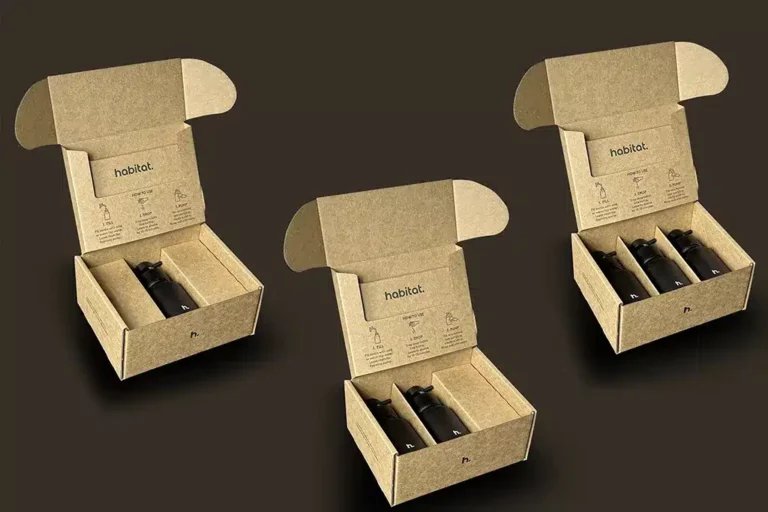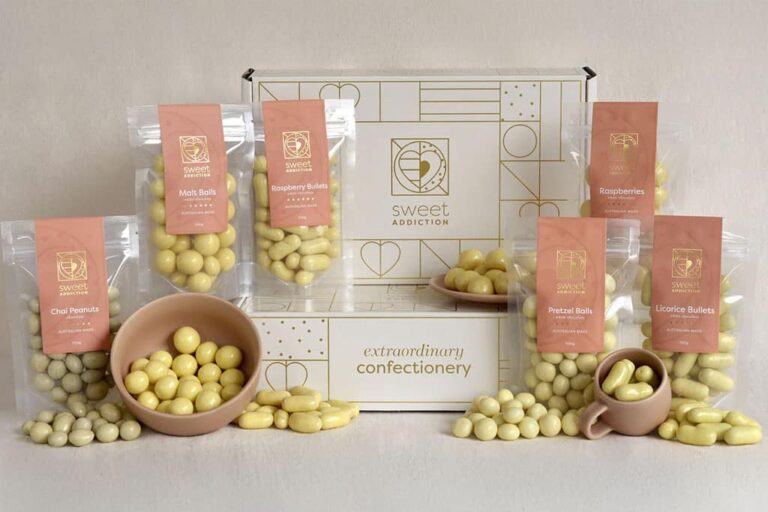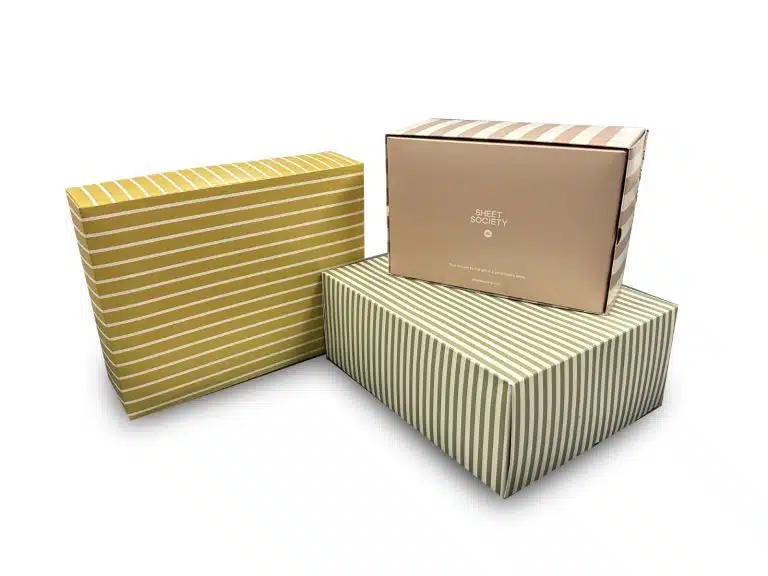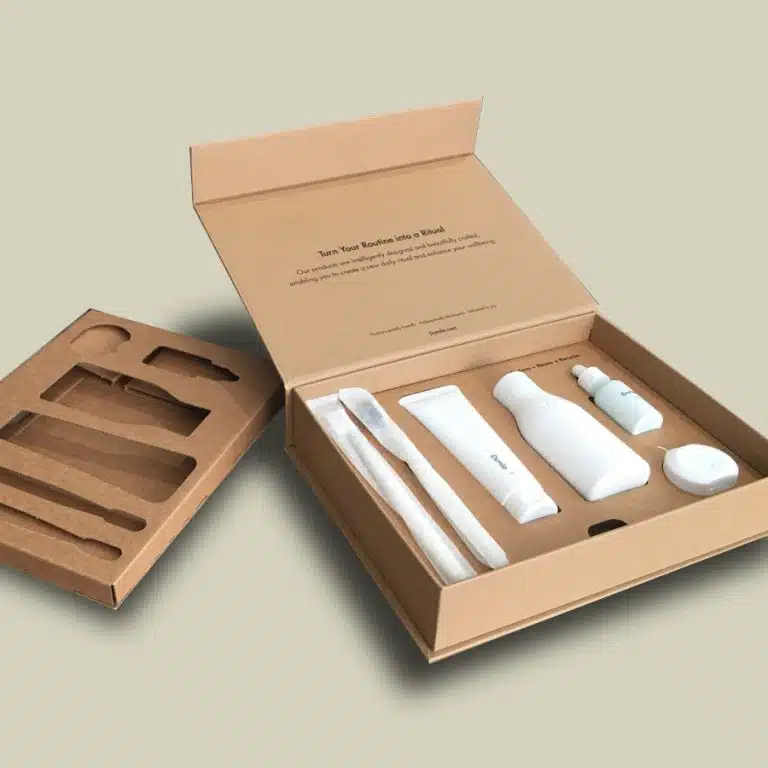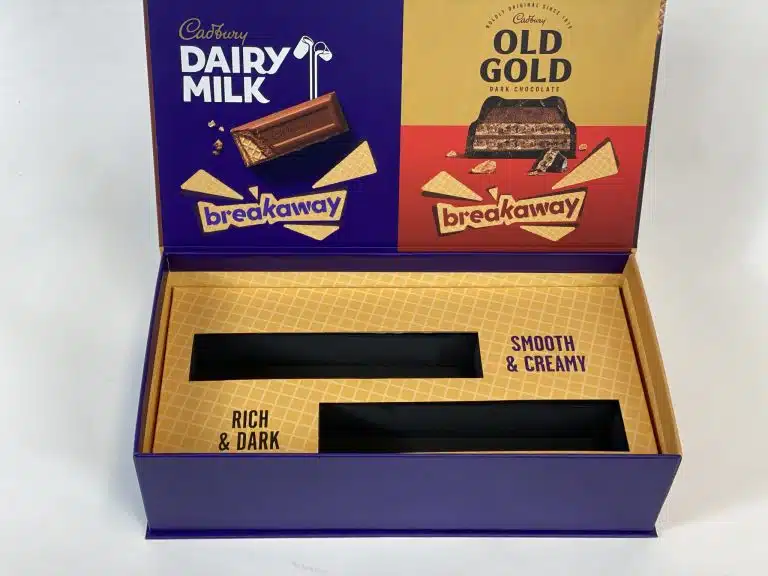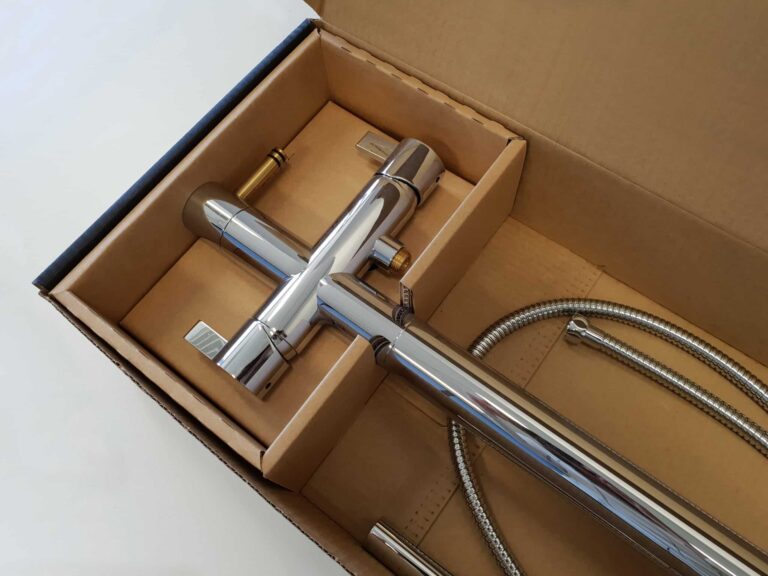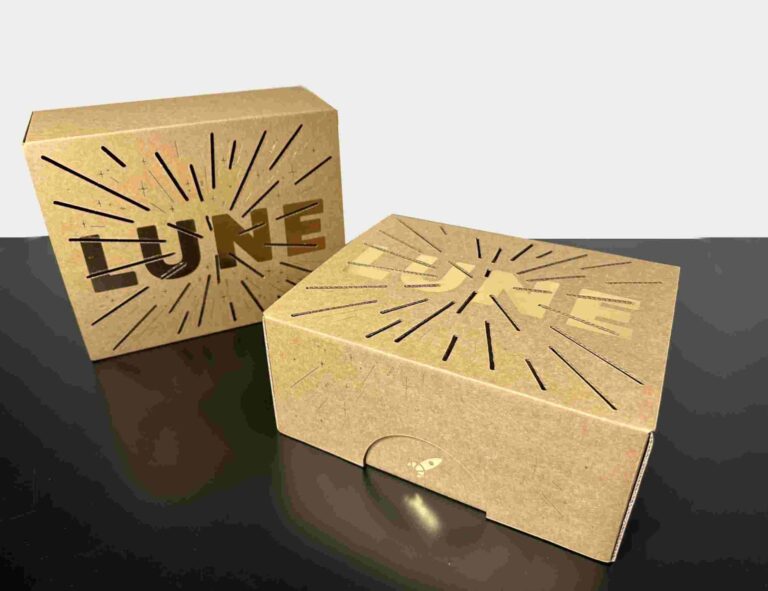

Ever wondered how your brand’s packaging goes from a cool design on screen to a stunning box in hand? It’s not magic, but it can feel like it!
Getting your packaging to look exactly right, reflect your brand’s personality, and protect your products involves a few key decisions. If you’re a procurement or operations pro, you know the struggle: balancing quality, cost, and lead time.
This guide is your roadmap to packaging print methods, colour systems, and finishes—helping you spec custom packaging solutions accurately so your job prints right the first time.
Colour: CMYK and PMS
Before exploring how designs get onto a box, let’s talk about colour. It is the foundation of your visual identity, and every specification that follows uses these terms.
CMYK (process colour)
CMYK mixes four inks – Cyan, Magenta, Yellow, and Key (black) – in tiny dot proportions that the eye blends into full-spectrum images. Four plates print photos, gradients, or artwork with hundreds of colours.
Limitations: Colour is a mix, so it varies slightly between presses, runs, and paper stocks. Vibrant shades like bright oranges, strong blues, most greens, fluorescents, and metallics cannot be reached using CMYK alone.
PMS (Pantone Matching System, spot colour)
PMS relies on a numbered library of pre-mixed inks. PMS 485, for example, is a specific red mixed to a formula and printed as a solid ink rather than a dot pattern. One plate, one ink, one colour. It guarantees brand colour consistency across runs.
Limitations: Each PMS colour requires its own plate and ink unit (adding cost). Photos cannot be built from them, and each extra colour adds to the quote.
Print methods
Different packaging print methods offer unique strengths, balancing quality, cost, and speed.
Flexographic printing (Flexo)
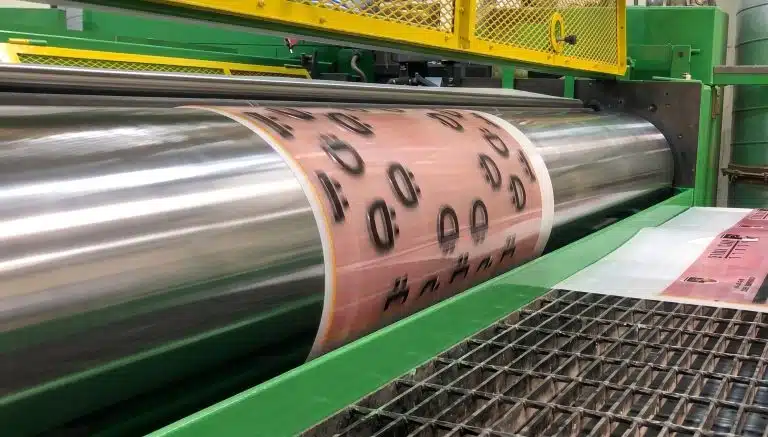
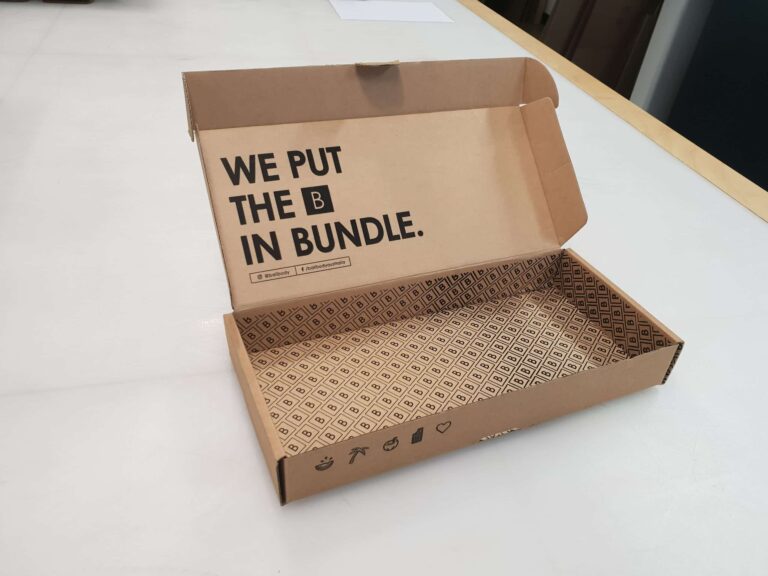
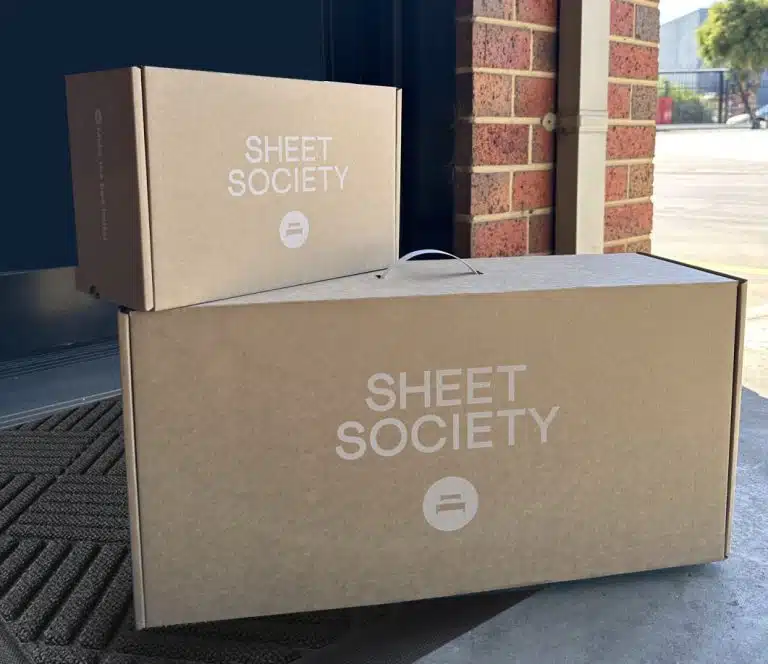
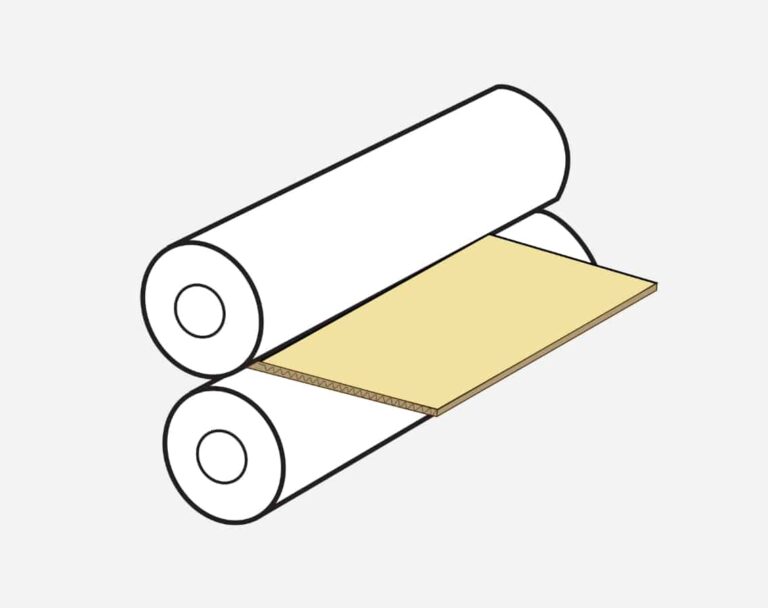
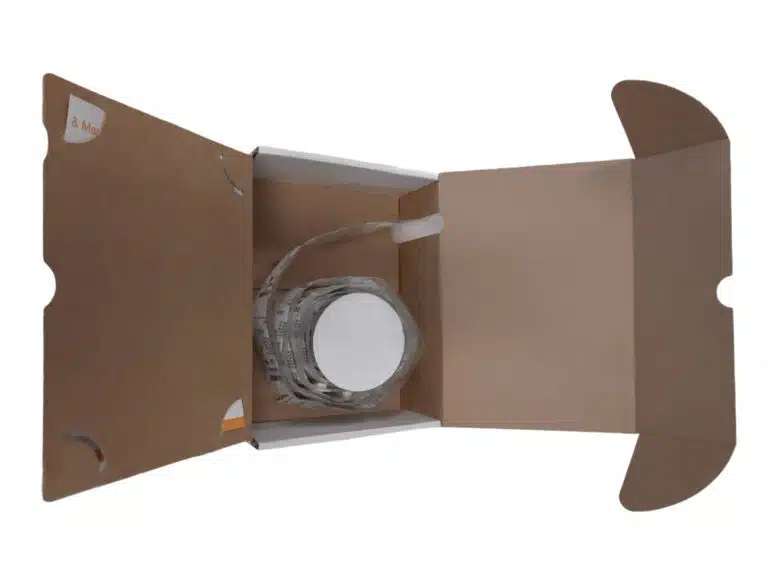
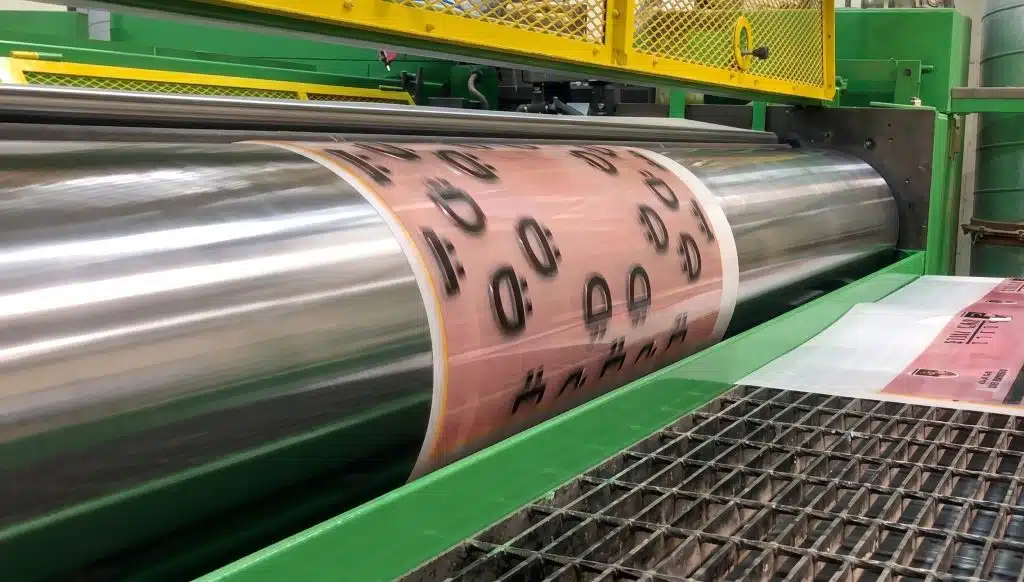
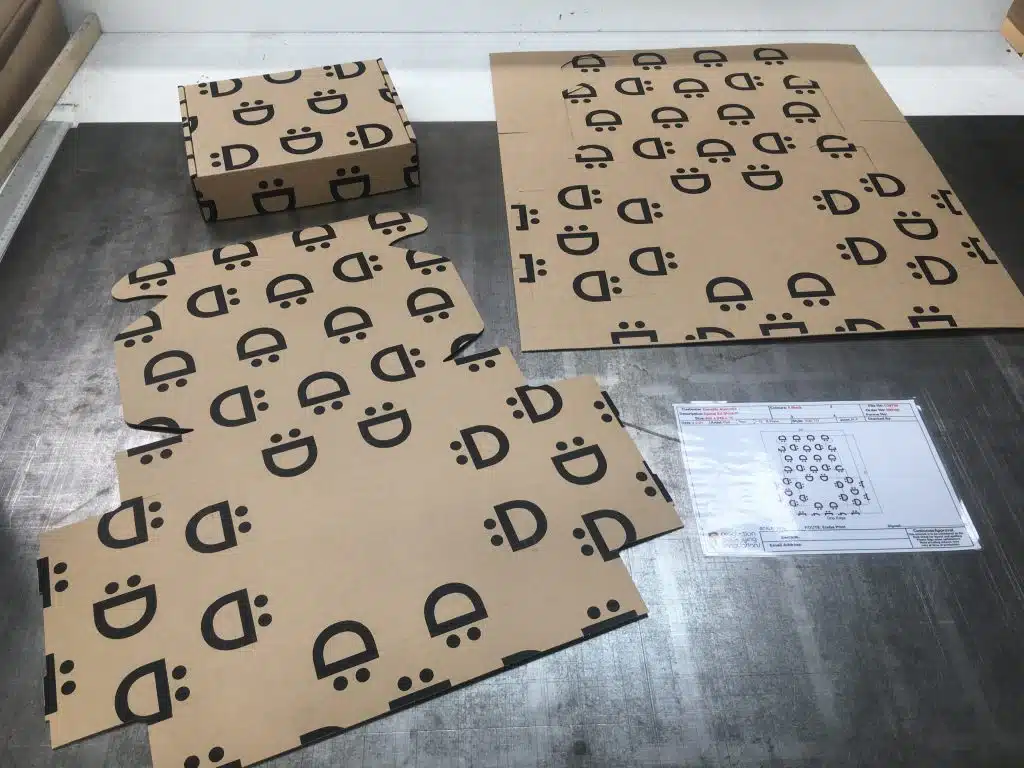
Flexo prints directly onto corrugated sheets using flexible photopolymer plates mounted on cylinders, operating inline with die cutting or folder-gluing.
- How Specified: Specified by 1 to 4 spot colours (PMS). Print is one-sided as standard; inside print requires an extra pass.
- Choose Liner First: Brown kraft liner is economical for a natural look, but inks appear darker and muted, and pale tones may not reproduce clearly. White liner costs more but produces cleaner, brighter colours for retail presentation.
- Where It Is Strong: Lowest unit cost for runs over 1,000 units (gap widens with volume). Stored plates carry zero tooling cost on repeat orders. Handles logos, brand colours, handling icons, barcodes, and address panels well in a single pass.
- Where It Falls Short: Direct printing on flutes means fine detail, small type, gradients, and photos do not reproduce cleanly (halftones are coarse). Colour registration is looser than litho. Flood-printed panels can show flute patterns (washboarding). Finishes are limited—varnish is common and simple solid foil is possible, but lamination, spot UV, and embossing are generally unavailable.
- Use Cases: Shipping cartons (RSC), die-cut mailers, transit boxes, carry packs, and retail-ready trays.
Lithographic printing (litho-laminate)
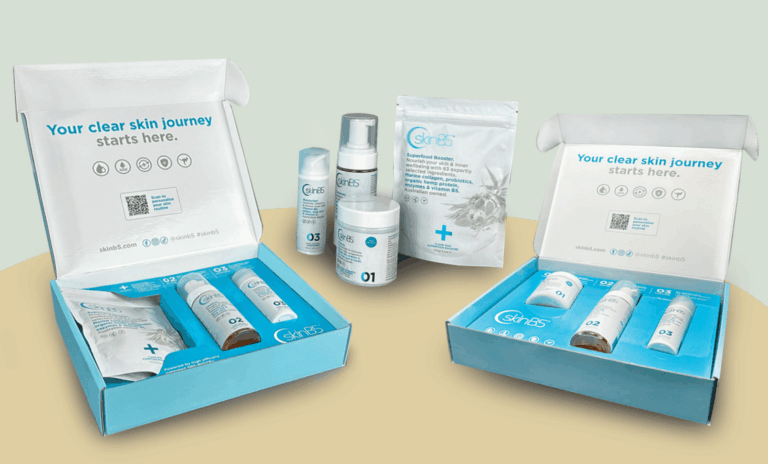
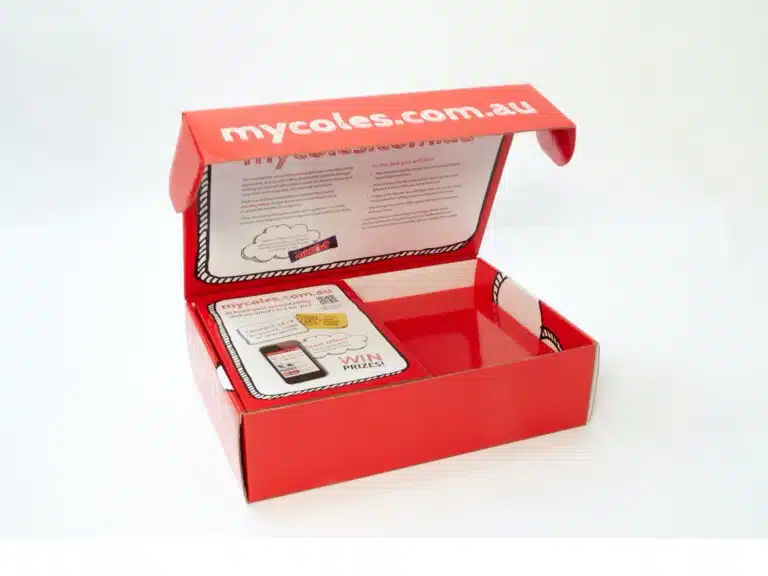
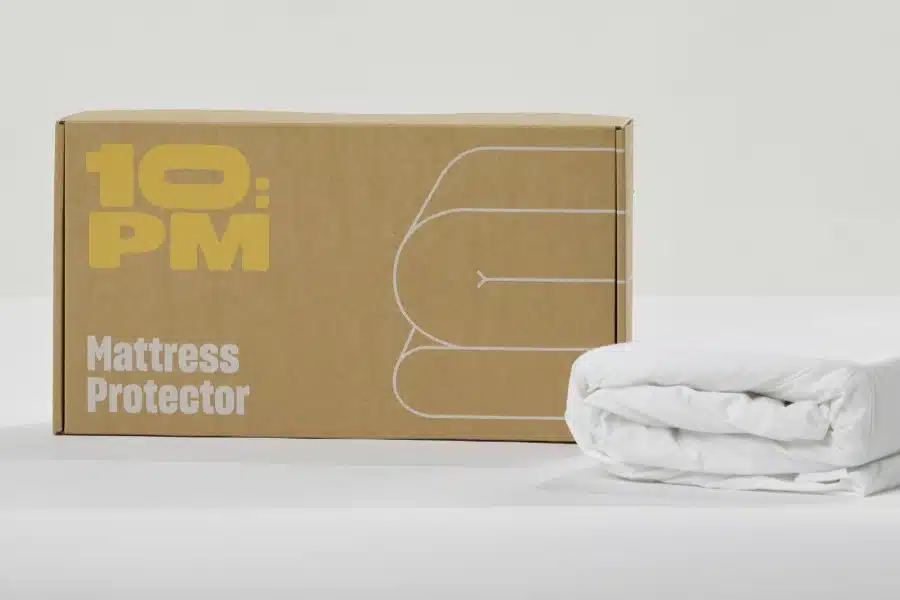
Litho-lamination is a two-stage process: artwork is offset-printed onto a paper top sheet (coated art board or kraft), then laminated onto corrugated board or mounted onto solid board for small cartons and sleeves.
- How Specified: CMYK, PMS, or both; one or both sides; plus finishes (varnish, laminate, spot UV, foil, emboss).
- Where It Is Strong: Best print quality on corrugated—photographic images, smooth gradients, fine text, tight registration, and exact PMS matching on coated paper. Almost every finish can be applied. Unit costs drop significantly at volume.
- Where It Falls Short: Higher setup (litho plates, separate print run, lamination, die cutting) and longer lead times. Unsuitable for short runs or changing artwork. The laminated sheet adds material and process costs per unit compared to plain flexo.
- Use Cases: Retail cartons, gift boxes, cosmetics, wine packaging, electronics, and floor displays.
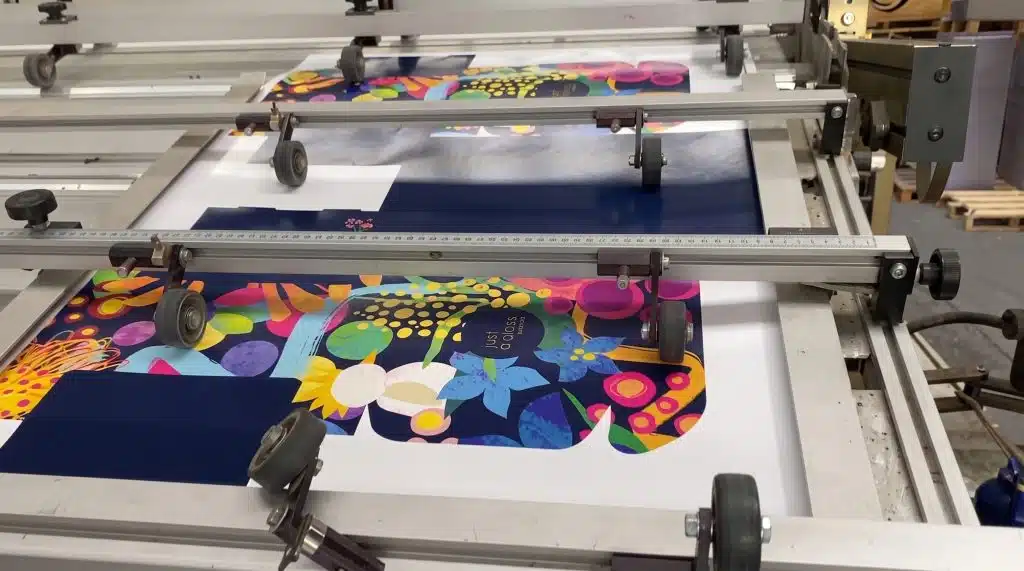
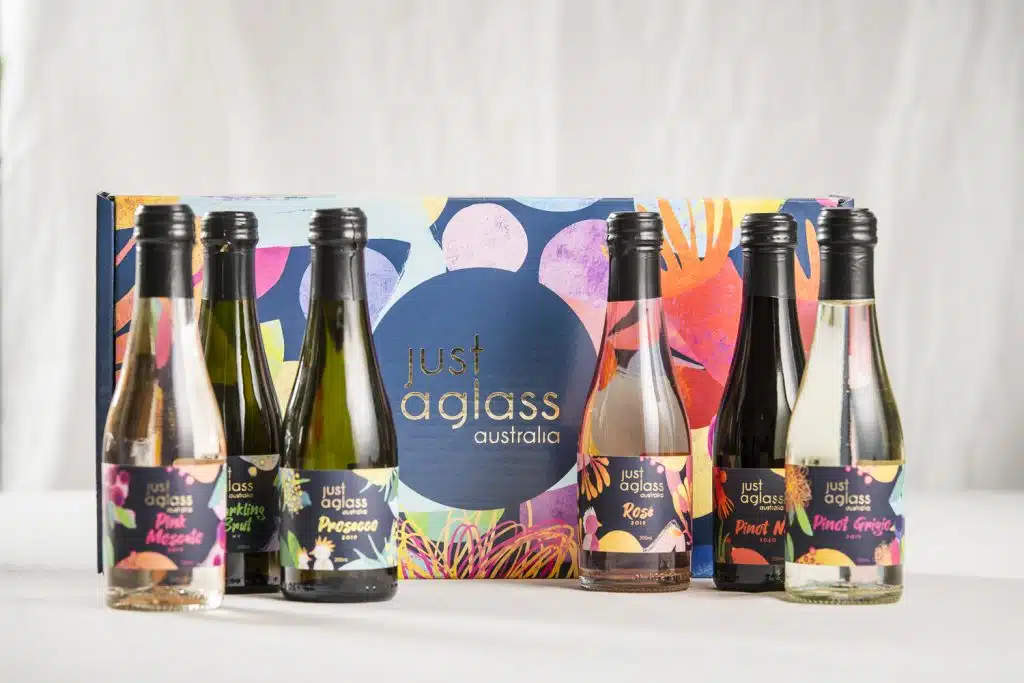
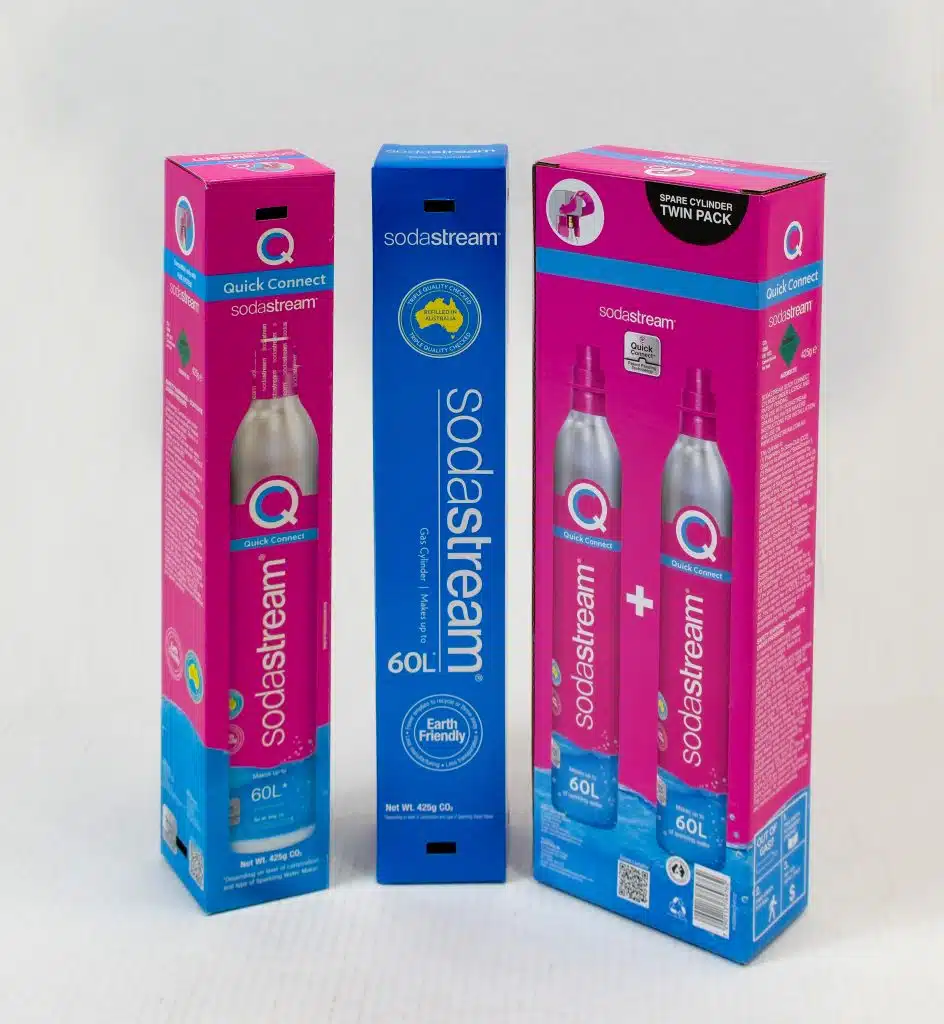
Litho on kraft with an opaque white underlay
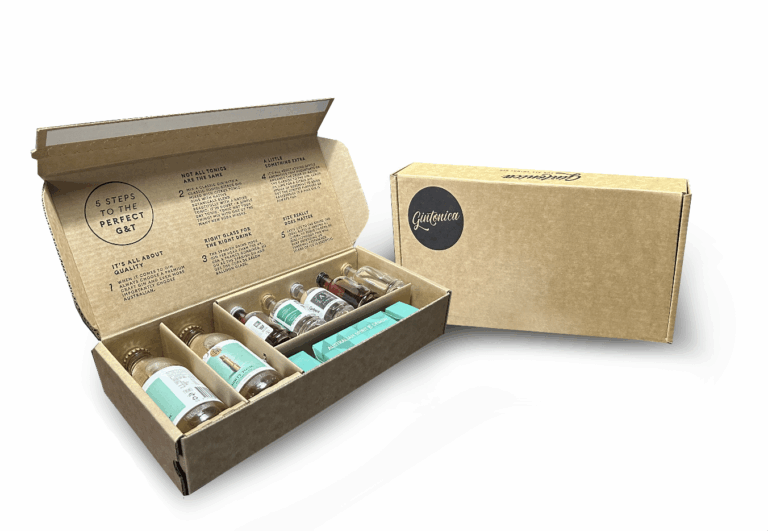
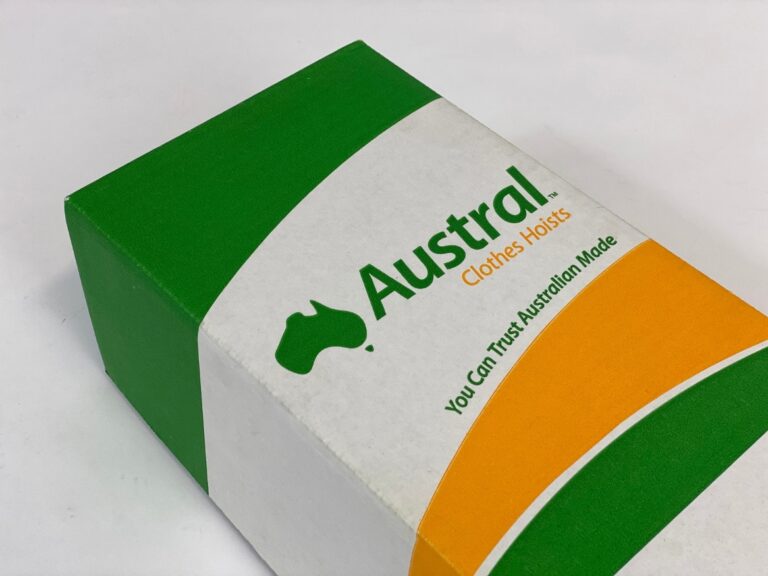
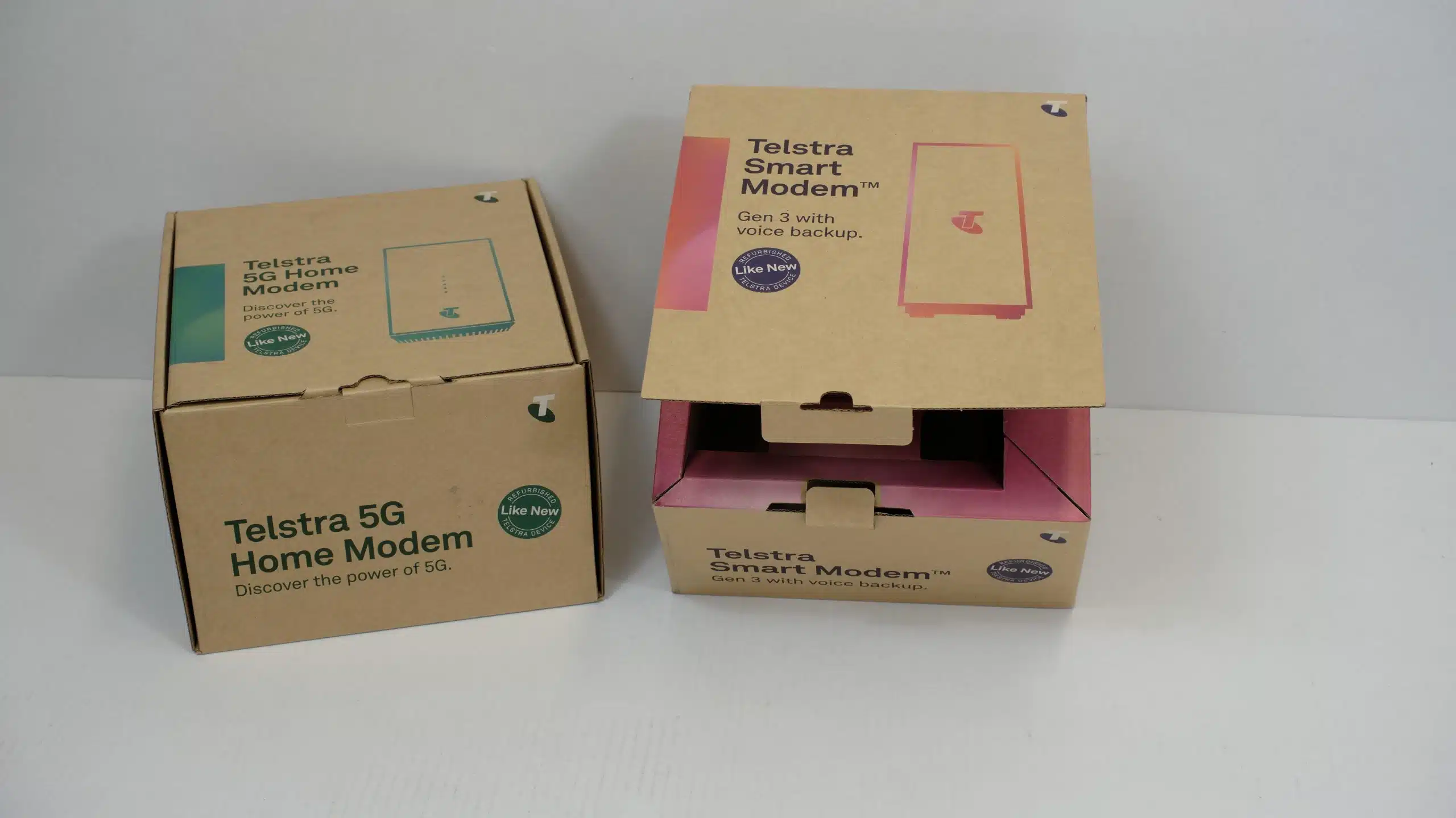
To print full-colour graphics on natural kraft, an opaque white ink is printed first—only under artwork areas needing clean colour. CMYK or PMS inks print over the white, while raw kraft fibre shows everywhere else.
- Where It Is Strong: Full-colour artwork on a natural kraft background (true “printed kraft”). Hides scuffs well and pairs exceptionally with gold foil.
- Where It Falls Short: Extra cost for the white pass and protective UV varnish. Kraft paper is uncoated, so colours are slightly softer than on art board. Unavailable on flexo (flexo on kraft prints spot colours straight onto liner with muted results).
- Use Cases: Eco-conscious, craft, or organic product lines needing product photography or full-colour graphics.
Digital printing
Need a small batch, prototype, or custom event packaging? Digital packaging printing applies inkjet graphics directly from artwork files onto board with no plates, cut on a flatbed plotter table with no cutting die.
- How Specified: CMYK process, one or both sides, quantities from 1 unit upwards.
- Where It Is Strong: Zero tooling makes digital packaging printing ideal for 1 to a few hundred units. Fastest turnaround (days). Artwork can change unit-to-unit at no extra plate cost (multi-SKU, seasonal, or personalised packs). Great for point-of-sale panels.
- Where It Falls Short: Flat unit cost that does not fall with volume (beaten by flexo and litho at higher quantities). Process colour only (no exact PMS guarantees). Plotter cutting is slower per unit, and decorative finishes are generally unavailable.
- Use Cases: Counter display units, shelf displays, prototypes ahead of plated runs, PR/influencer kits, welcome boxes, and short-run gift boxes.
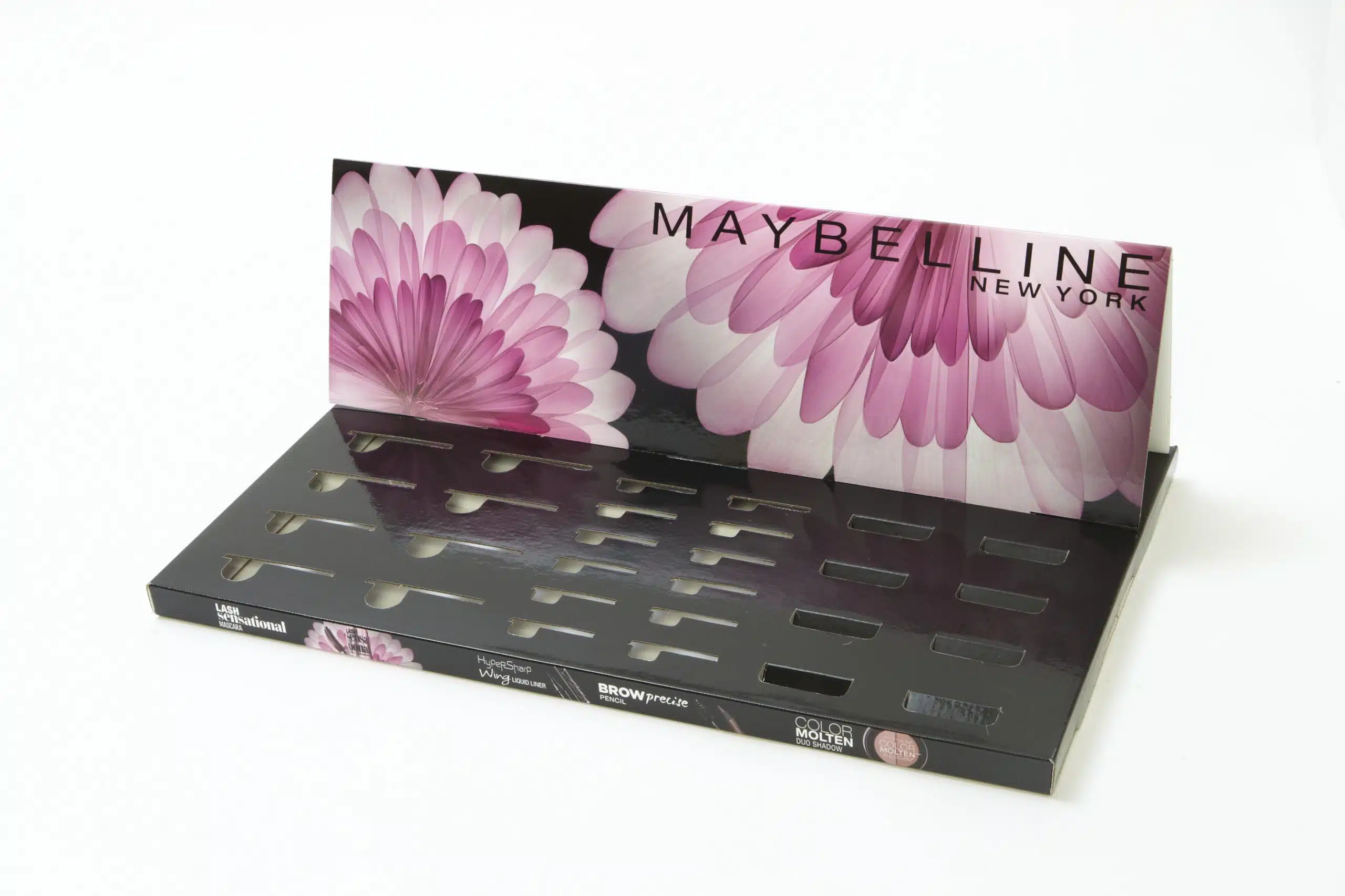
Print method comparison
| Feature | Flexo | Litho-laminate | Digital |
|---|---|---|---|
| Print quality | Solids & simple art | Highest (Photographic) | High (Full colour) |
| Colour | 1 to 4 spot colours | CMYK, PMS or both | CMYK |
| How it looks | Flat, slightly muted; board texture shows | Saturated colour; crisp edges | Bright, flat; matte, soft edges |
| Setup/tooling | Print plates | Litho plates + lamination | None |
| Cutting | Die | Die | Plotter, no die |
| Run size | Medium to high | Medium to high | 1 to a few hundred |
| Unit cost at volume | Lowest | Low at volume | Flat |
| Turnaround | Standard (4-6 weeks) | Standard (4-6 weeks) | Fastest |
| Finishing options | Varnish, cutouts, solid foil | All | Varnish, cutouts |
| Typical use | Shippers, mailers, RRP | Retail, gift, premium | Displays, samples, short runs |
Finishing techniques
A finish is applied after printing, listed as a separate line item on quotes, and usually requires a separate pass. Most require a litho-printed sheet.
Varnish
A clear protective coating applied over the sheet to seal ink, prevent scuffing, and add a uniform sheen.
- Machine Varnish (Aqueous/Sealer): Applied inline on litho presses as the last unit. Cheapest, near-invisible baseline to stop set-off and scuffing in the stack and transit.
- Gloss & Matte Varnish: Gloss lifts colour and adds shine; matte knocks shine back for a natural look.
- UV Varnish: Cured under UV lamps for a harder, scuff-resistant finish (ideal on kraft where lamination isn’t wanted).
- Trade-offs: Low cost and recyclable with board, but offers less protection than film laminate against heavy rubbing on dark panels.
- Works With: Litho (standard); flexo and digital occasionally.
- Use Cases: Litho retail cartons, sleeves, gift box outers, bottle packaging, and displays.
Laminate (cellosheen)
A clear plastic film bonded to the sheet with heat and adhesive for maximum scuff, moisture, and handling protection.
- Gloss & Matte Cellosheen: Gloss deepens bright colours; matte offers a soft base for spot UV and foil contrast.
- Anti-Scuff Matte: Harder surface specified on dark flood-colour designs to prevent fingerprints and rub marks within days.
- Soft Touch & Biodegradable: Soft touch gives a velvet feel for luxury boxes; biodegradable films offer lower end-of-life impact (check current certification with PPI).
- Trade-offs: Costs more than varnish (extra pass + film) and adds plastic to paper board. Unavailable on standard flexo or digital.
- Works With: Litho-laminate and rigid boxes.
- Use Cases: Gift packs, presentation boxes, cosmetics and skincare cartons, and dark/photographic designs.
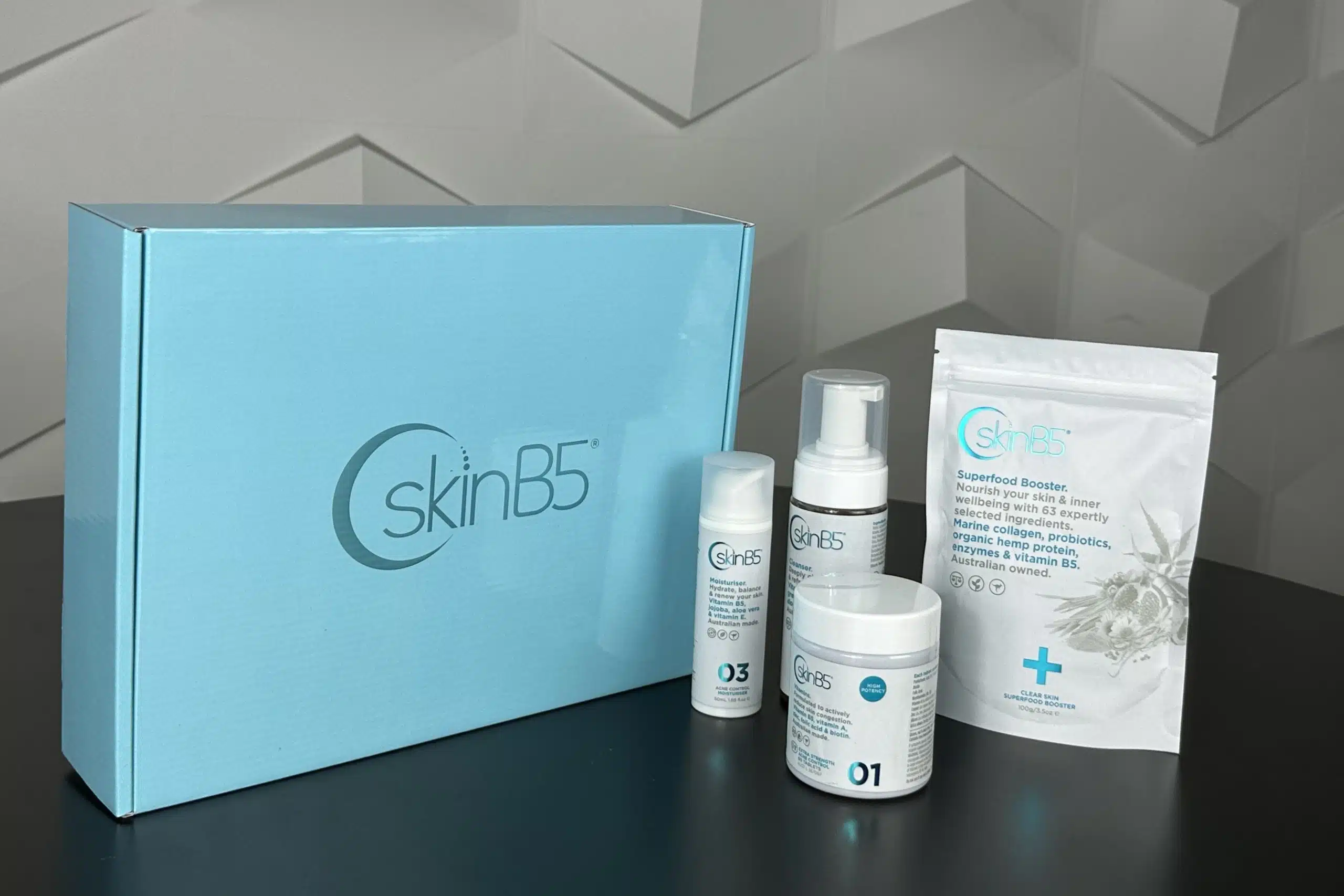
Spot gloss/spot UV
A high-gloss UV-cured coating applied only to selected areas (logos, names) after laminating.
- Strengths & Trade-offs: Cheapest way to make a litho design look considered without extra metal tooling. Requires a matte base (disappears on gloss). Standard registration tolerances apply—keep spot UV to solid shapes, allow a small trap in artwork, and avoid thin hairlines.
- Works With: Litho-laminate with matte cellosheen (recommended) or matte varnish.
- Use Cases: Logos, brand marks, product names, and subtle background patterns on premium retail cartons and gift boxes.
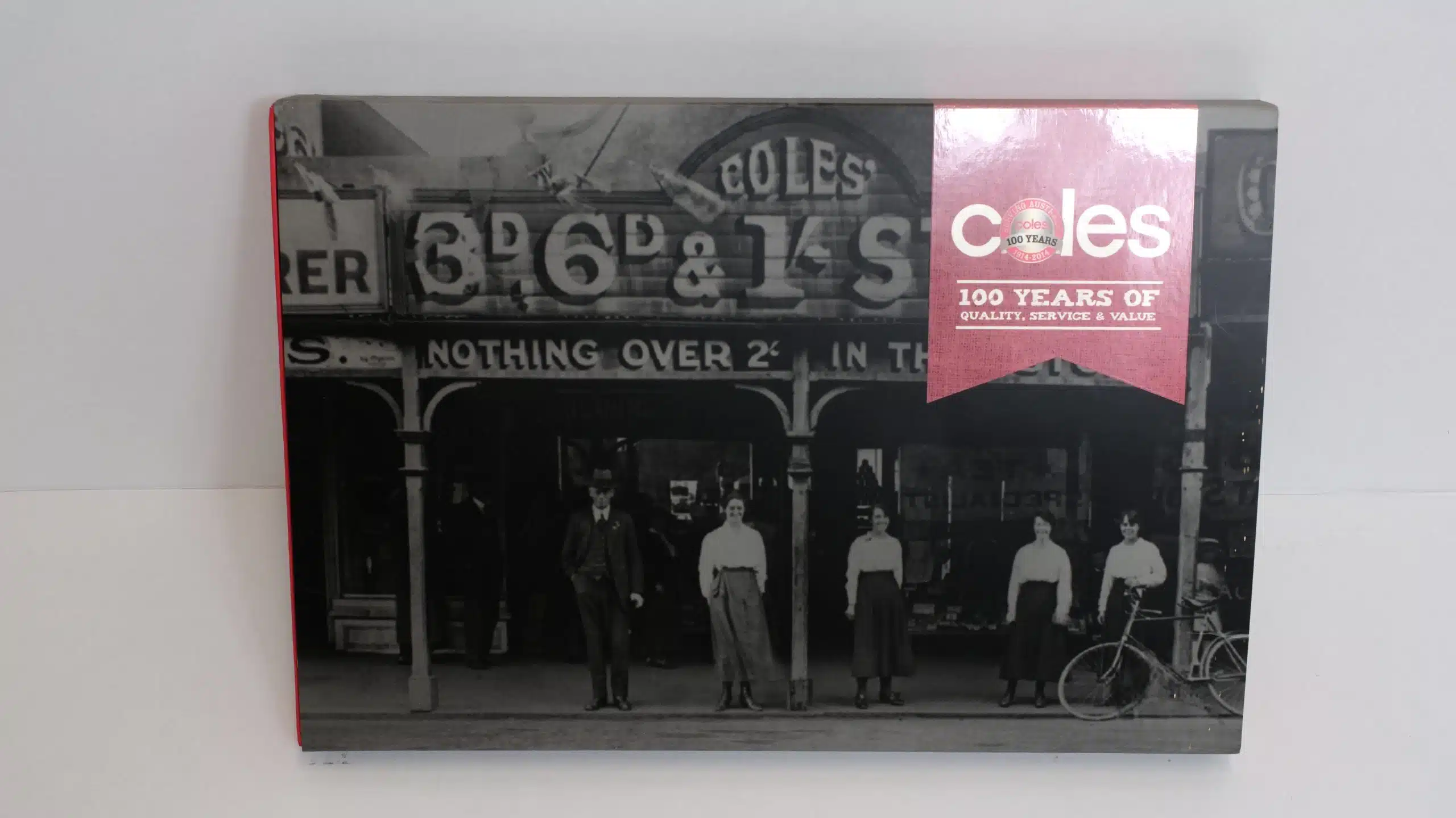
Foil stamping
Hot foil stamping uses heated metal dies to press metallic (gold, silver, copper, rose gold) or pigmented (blue, red, black, white, holographic) foils onto the sheet.
- Strengths & Trade-offs: The clearest visual signal of a premium pack. Works on white board, matte laminate, and brown kraft. However, foil dies add tooling costs, and large solid areas risk pinholing. Fine serifs can break up. On flexo shippers, foil is stamped on raw liner as a solid mark only.
- Works With: Litho-laminate, rigid boxes, kraft top sheets, and flexo shippers.
- Use Cases: Logos, typography, and accents on luxury gift boxes, cosmetics, wine & spirits, and retail cartons.
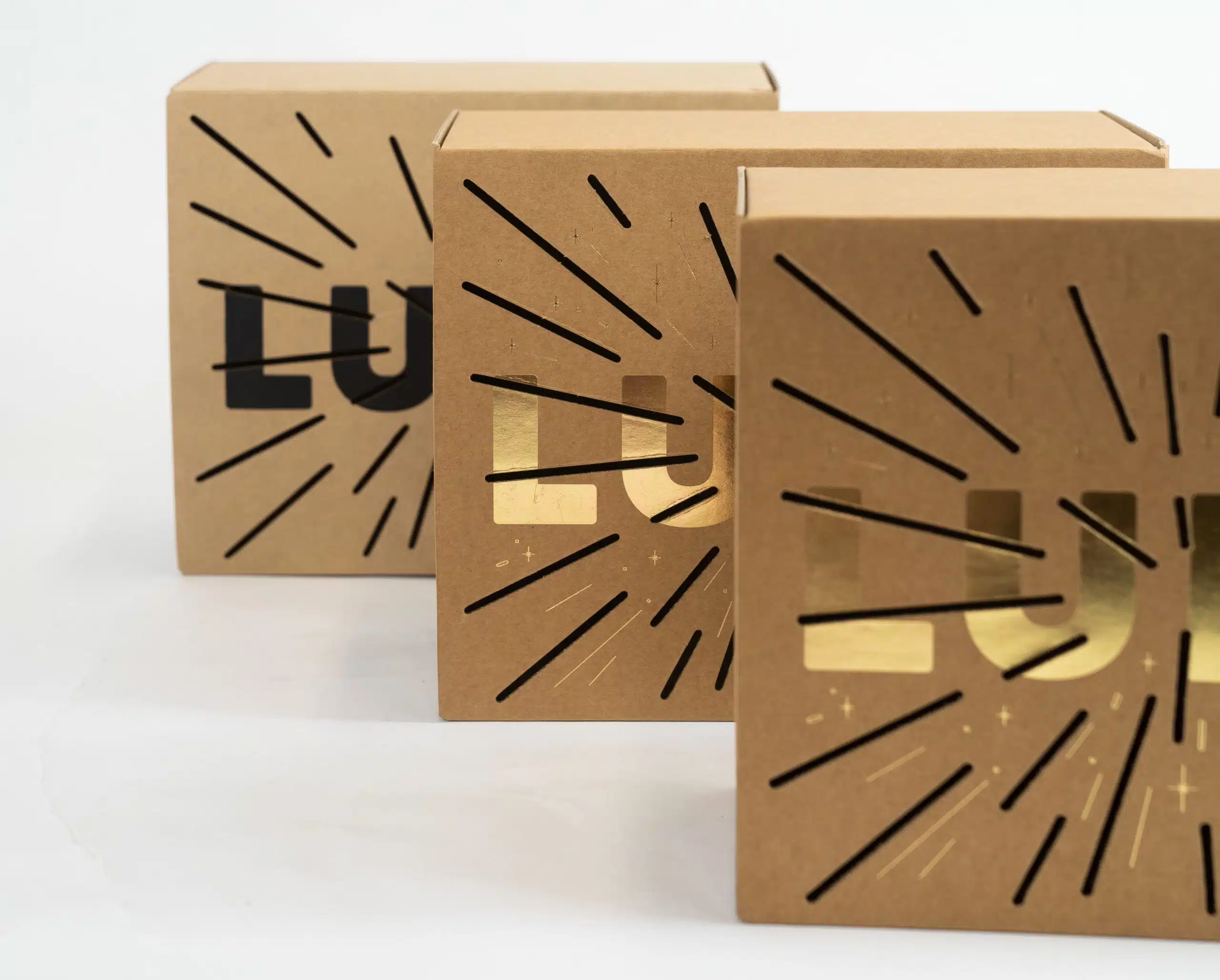
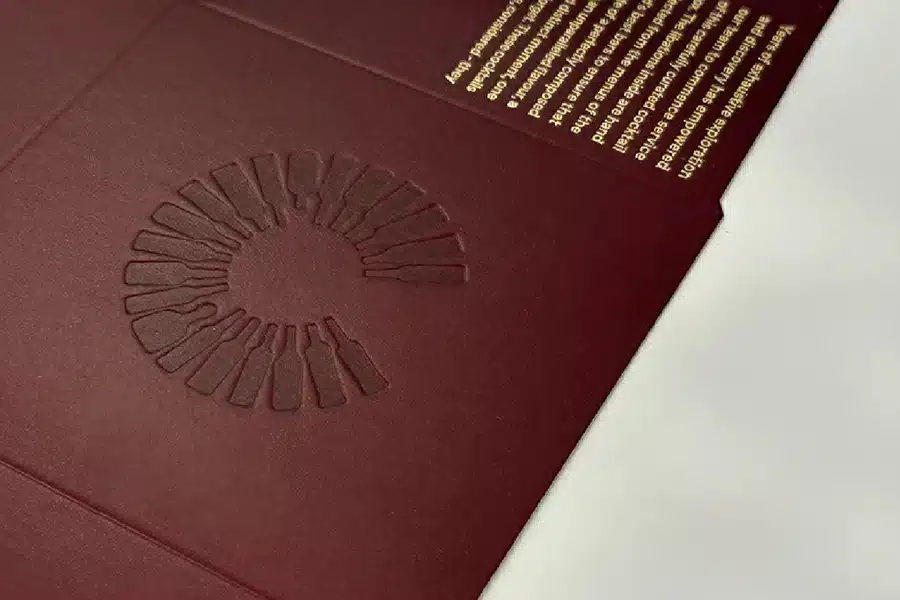
Embossing and debossing
Male and female dies press the sheet so artwork stands proud (emboss) or is pressed in (deboss).
- Strengths & Trade-offs: Adds tactile dimension. Debossing on corrugated or rigid board holds up subtly, and combining foil with deboss is popular for gift packaging. On litho-laminated corrugated, deep embossing can crush internal flutes—debossing is the safer choice for corrugated packaging.
- Works With: Litho-laminate (deboss preferred) and rigid boxes.
- Use Cases: Logos, monograms, and emblems on presentation packaging, wine & spirits, premium confectionery, and cosmetics.
Finishing compatibility matrix
| Finish | Flexo | Litho | Digital |
|---|---|---|---|
| Varnish | Yes | Yes | Yes |
| Laminate | No | Yes | Generally, no |
| Spot UV | No | Yes | Generally, no |
| Foil | Limited | Yes | Generally, no |
| Emboss/deboss | No | Yes | Generally, no |
Conclusion
Specifying custom packaging solutions follows a logical sequence: define your colour system first, select your print method based on volume and detail, and then add your post-print finish.
Flexo suits high-volume transit packaging, litho handles detailed retail presentation, and digital packaging printing fits shorter runs or changing artwork. Your lead time, unit cost, material, and finishing requirements all play a part.
At PPI, our packaging engineers can help you weigh these factors before production begins, ensuring the right balance of quality, cost, and turnaround.
Ready to get your next run printed right the first time? Explore our range on our Homepage or speak directly with our packaging engineers.